
Rain planning in West Covina
Your West Covina Roofing Stormwater Checklist Before Rain
Rain can wash roof debris into the street. This checklist keeps your site clean and your drains clear. Call us with any question as you work through it.
(626) 593-1910A roof job turns your home into a small work site, where wind moves torn-off shingles and nails fast. West Covina publishes stormwater records that show how to keep that material on your own property.
Where These Checklist Items Come From
Each group below is built on a West Covina, Los Angeles County or National Weather Service record.
The City posts stormwater rules for building sites, and we kept only the roofing parts. Concrete and grading steps stay out of this list, because they do not apply to roof work.
The City also posts a project-type LID screening checklist for stormwater planning, and it sorts jobs by type. Routine work on an existing home reads differently there, so ask the City whether your job falls under it.
Not every roof replacement needs an LID plan, and we do not read that checklist as a universal rule.
Keep Materials On Site and Covered
Store bundles, rolls and fuel on your own property, contained and covered until we use them.
Wind and rain move loose material off a driveway fast, so a tarp and a tight stack matter. The City hosts a small-construction BMP flyer for sites like yours, and BMP means best management practices.
- Stack bundles and rolls on your own property, and keep them out of the street.
- Cover every stack with a tarp when work stops for the day or rain moves in.
- Contain and cover fuel cans and loose building materials.
- Ask the City about a right-of-way permit before anything sits on the street.
- Check the site at the end of each work day and confirm that every stack is covered.
Cover the Debris Bin and Sweep Around It
Tear-off debris belongs in a covered bin, and the ground around it needs daily sweeping.
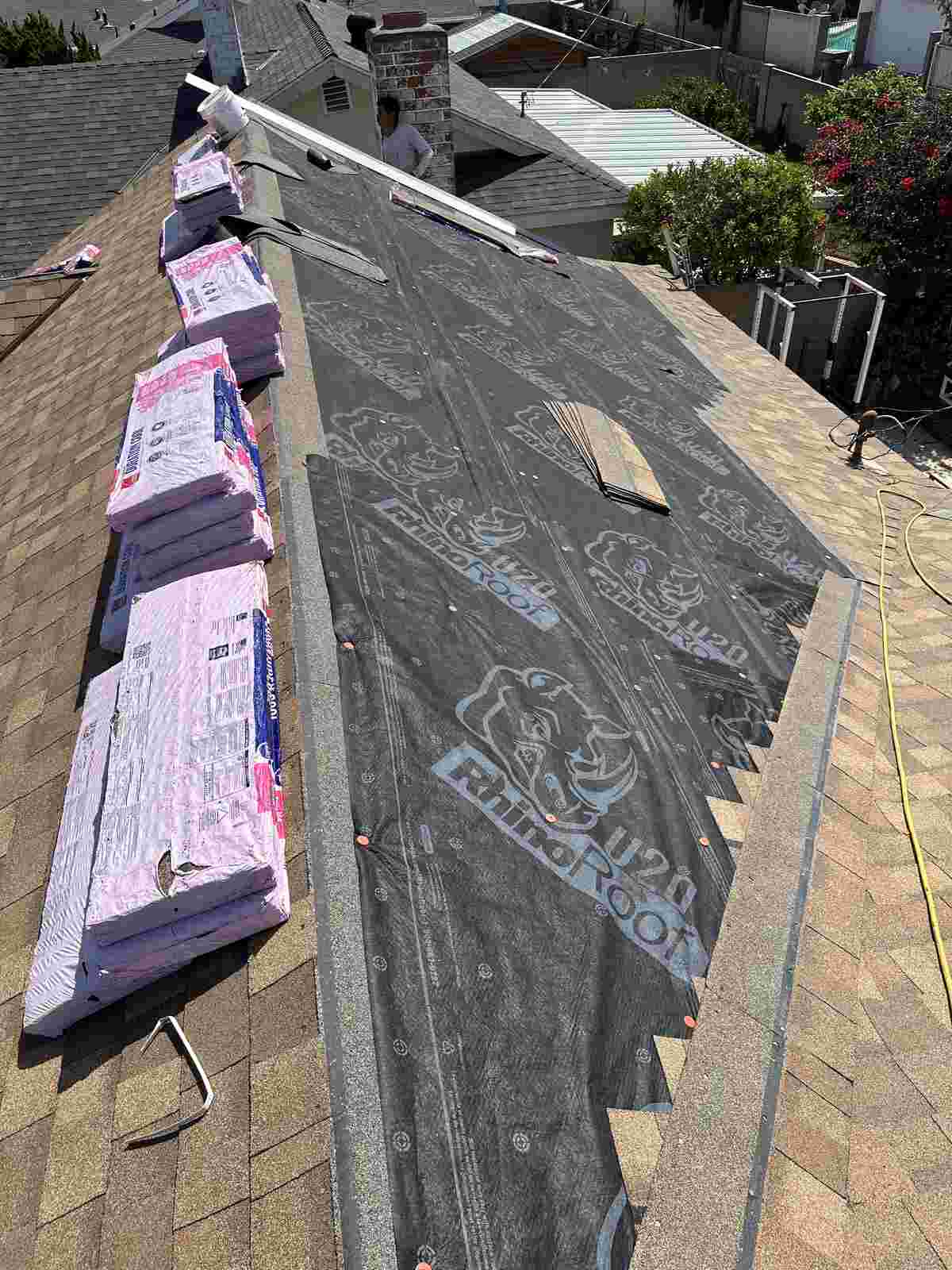
Tear-off means stripping the old covering down to the deck, and old shingles carry grit, nails and paper. A rolled-back tarp keeps that load in the bin when rain hits an open site.
The City's General NPDES Notes cover stormwater during construction, and they ask sites to hold waste during unexpected storms. They also ask for one controlled temporary disposal spot, kept away from stormwater runoff.
Gravel bags and straw wattles are low barriers that slow water and catch grit before it travels.
- Cover the bin with a rollback tarp whenever nobody is loading debris into it.
- Sweep the ground around the bin at the end of each work day, before rain arrives.
- Set one controlled spot for temporary waste, away from runoff and away from the drain.
- Ring the bin and any portable toilet with gravel bags or straw wattles.
- Check the right-of-way permit rules before a bin sits on the street.
Protect the Storm Drain at Your Curb
Keep controls around the nearest storm drain for the whole job, not only on rainy days.
A storm drain carries water to creeks, rivers and the ocean untreated, so debris should never reach it. The City's flyer says storm drains must be protected at all times, and perimeter controls belong around the site.
- Set gravel bags or straw wattles around the storm drain nearest your curb.
- Keep perimeter controls around the work area, the bin and any portable toilet.
- Drive around the controls so tires do not crush them during the job.
- Clear caught grit out of the controls before the next rain arrives.
- Keep absorbent material or a wet/dry vacuum on site in case of a spill.
Keep the Hauling and Disposal Records
Save the records that show where your old roof material went after the tear-off.
West Covina's waste-diversion forms point to Athens Services or a City-approved self-haul path for your debris. They also request disposal records and flag permits for bins placed on the street.
What applies depends on the project, so read the City's current form before you order anything. Rules and forms change, and the City page always carries the live version.
- Read the City's current waste-diversion form before you order a bin for the job.
- Confirm whether Athens Services or an approved self-haul path fits your project.
- Ask for disposal records and keep them with the rest of your project file.
Check the Forecast Before We Open the Roof
Look up the local forecast and current hazards before the deck comes open.
The National Weather Service office in Los Angeles posts local forecasts, radar and current hazards. Search your own location there before we open the deck, rather than trusting an old printout.
A forecast is guidance, not a promise about your address, so we read it with you and adjust.
- Check the local forecast and current hazards the day before work starts.
- Look at the radar again on the morning the deck opens, before anyone starts the tear-off.
- Recheck the forecast before any late-day work continues on an open roof.
- Agree with us in advance on the weather that stops work for the day.
- Keep covers on site so an unexpected storm cannot carry waste off your property.
Check the Roof and Gutters Before Winter
Los Angeles County tells residents to check roofs for leaks and clear rain gutters before winter.
West Covina sits in Los Angeles County, California, and that County guidance is a useful first pass. Do this part from the ground, and stay off a wet or steep roof at any time.
A small roof repair now can save a wet ceiling later in the season.
- Look for stains or drips on your ceilings before the rain starts.
- Clear leaves and grit out of gutters and downspouts.
- Watch where water spills when the downspout runs.
- Note any loose flashing or slipped shingles and tell us.
When to Stop Work and Call Us
Stop and call us when rain starts, a control fails, or debris leaves your property.
Some questions belong with the City, because permit rules and drain rules are theirs to answer.
We handle the roof and the cleanup that comes with it, and we work under CSLB #1112525. West Covina Roofing Contractor is a division of Home Vision Remodel.
Call us at (626) 593-1910 for a free estimate, or contact us with the details of your project.
- Rain starts while the deck is still open.
- A gravel bag or straw wattle washes out of place.
- Debris blows into the street or a neighbor's yard.
- Water pools around the storm drain at your curb.